
A social media account affiliated with Chinese state broadcaster CCTV has accused US AI labs of applying a double standard to monitoring and data collection, singling out Anthropic for criticism.
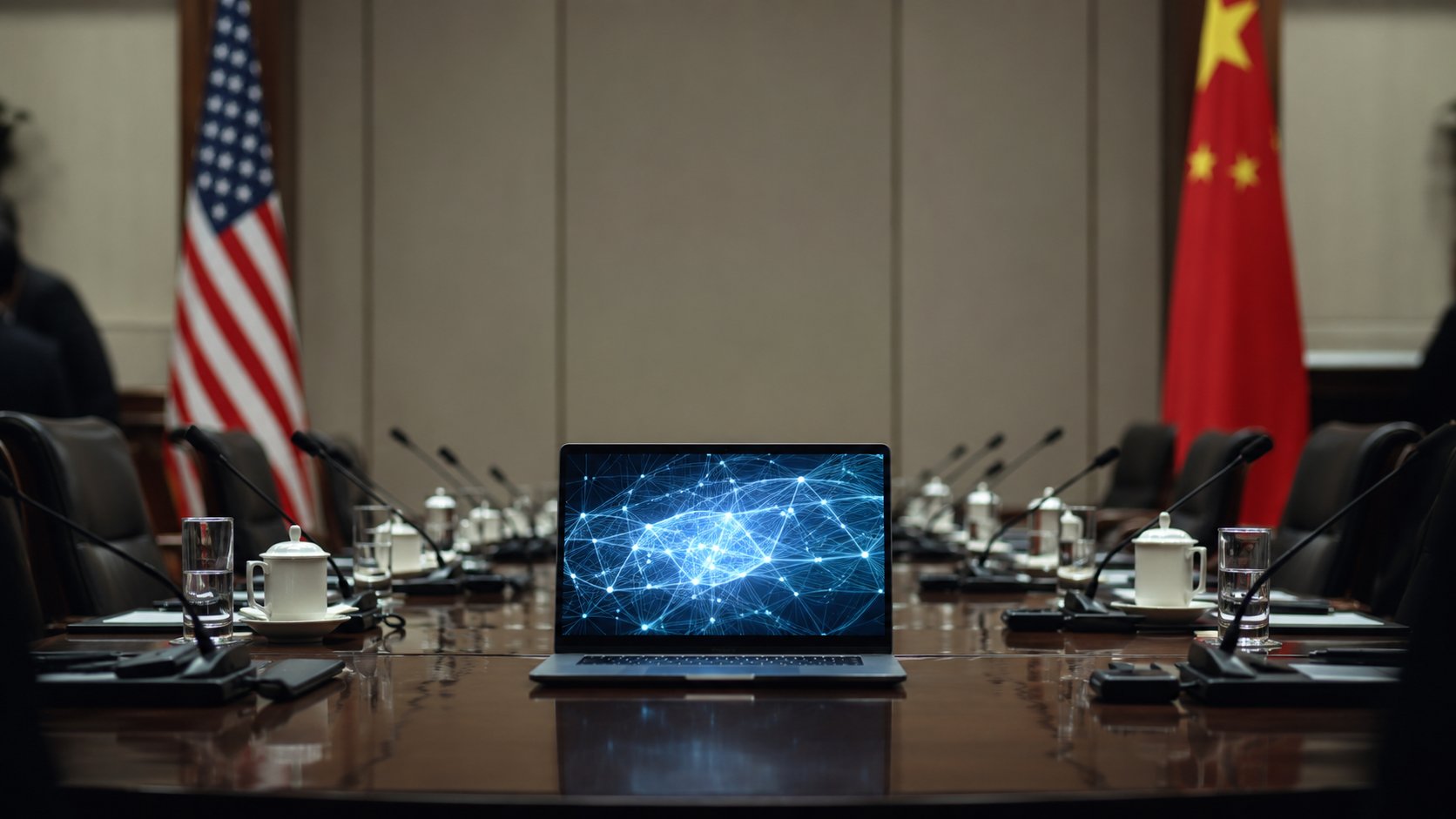
The critique comes amid reports that the two countries could hold talks on AI governance and deployment before Xi Jinping’s planned US visit on Sept. 24.
According to Bloomberg, the criticism was published through Yuyuan Tantian, a social media account affiliated with Chinese state broadcaster CCTV.
The commentators accused Anthropic of trying to shape global AI rules through lobbying and warnings about militarized AI development. The commentary said Anthropic has a “desire for control hidden in its saviour complex” and called on the US government to distinguish between genuine security threats and legitimate technological competition.
Anthropic has been one of the more accusatory AI labs when it comes to Chinese AI model development. It has accused Alibaba, DeepSeek, Moonshot, and MiniMax of “illicit model distillation.” This is a process that involves a developer using thousands of bot accounts to generate millions of exchanges with a larger AI model, in this instance Anthropic’s Opus or Fable, and then using those responses to train its own AI model.
Model distillation is a widely used training technique, including among US AI developers. Anthropic argues that using deceptive accounts to extract millions of Claude responses violates its terms and amounts to industrial-scale model theft.
Some AI leaders see an opening for cooperation
Anthropic has taken a particularly confrontational public position, while an industry coalition has urged US policymakers to avoid broad restrictions on open-weight AI models. Even Anthropic’s main rival, OpenAI, has argued for continued access and acknowledged that some of the AI models coming out of China are impressive.
“I have always believed US/China AI safety collaboration would be desirable but thought it was unlikely to happen,” said Dean Ball, OpenAI’s head of strategic futures, on X. “In the past few months, though, the ground has shifted. There is a window of opportunity.”
Interest in Chinese AI models has grown as developers and businesses pay closer attention to deployment costs. While Anthropic, OpenAI, and Google remain among the performance leaders, some Chinese open-weight models offer competitive results on particular tasks at less than one-tenth of the token price of some leading US models.
Chinese AI growth intensifies policy scrutiny
The growing adoption of Chinese models has also intensified policy scrutiny in both countries. In the US, several officials have warned of sanctions against Chinese AI labs if they continue to distill from frontier US AI models. The Chinese government has reportedly looked into export controls for its frontier models, using a similar tactic to the US government to delay releases and potentially block exports altogether.
At a time of increased tension between the two countries, the talks could turn down the temperature and allow both sides to reach some form of understanding. Similar tensions arose when the US government banned exports of Nvidia GPUs and other crucial data center technology, before an agreement was reached allowing Chinese companies to buy some advanced chipsets.
However, that still prevented Chinese companies from acquiring the leading-edge chipsets available to US AI labs. An agreement on AI governance and deployment that similarly favors US companies is unlikely to go as far, given China’s own leverage through its increasingly popular AI models.
For enterprise AI teams, the outcome could affect which models remain available across borders, how providers monitor access to their systems, and whether businesses can combine Chinese open-weight models with US commercial platforms. The talks could therefore help determine whether the two countries’ AI ecosystems remain largely separate or operate under rules that permit more cross-border access and development.