You finally landed your dream remote job.
No more rushing through traffic. No more long commutes. No more spending part of your paycheck just getting to work. You can work from home, have a little more control over your schedule and, best of all, your client or employer abroad tells you that you’ll be paid in U.S. dollars.
Sounds like a win.
Until the first payment arrives.
Suddenly, you have a new set of questions. Should you convert your dollars to pesos right away? Should you hold on to some of it? How much should go toward your bills, savings or family? And with exchange rates changing, when is the right time to convert?
For Filipino freelancers, virtual assistants and other remote workers earning from U.S.-based clients and companies, getting paid in dollars can come with a different kind of financial learning curve. Your income may be in one currency while most of your expenses are in another, making it important to have a plan for managing your earnings once they arrive.
Managing money is a skill, and like any skill, it gets easier with the right habits and tools.
So if you are just starting out with U.S. income, here is a five-step beginner’s guide to help you organize your earnings, manage your expenses and make more informed decisions about your money.
Step 1: Put Your Regular Payments on Autopilot
Credit cards, electricity, water, subscriptions and other recurring expenses can easily be overlooked when you are juggling multiple financial commitments.
Scheduling regular payments through your digital banking app can help you stay on top of due dates without having to remember each payment every month. It also saves you a trip to a payment center and gives you a clearer picture of where your money goes.
Step 2: Set Aside an Emergency Fund
An emergency fund gives you a financial cushion when unexpected expenses come up.
Instead of keeping all your money in one account, consider setting aside a portion of your income in a dedicated savings account. Digital banking makes it easier to separate your savings from your day-to-day spending, monitor your progress and build the habit of saving regularly.
Step 3: Consider an RCBC U.S. Virtual Account for U.S. Income
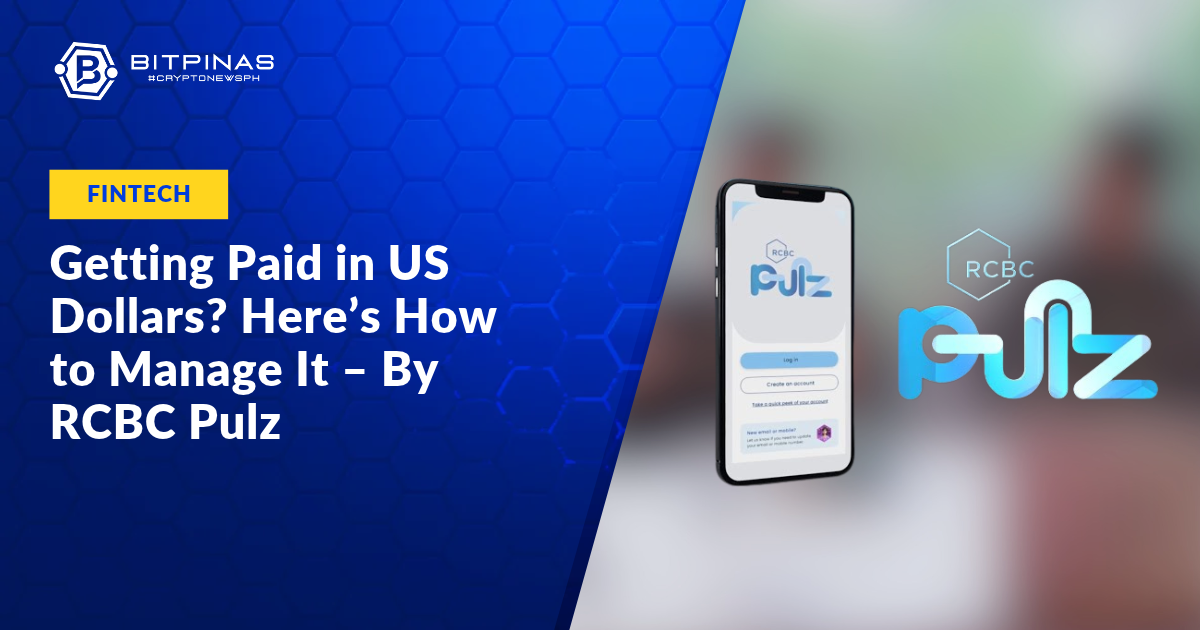
For freelancers, virtual assistants and digital nomads working with U.S.-based clients or companies, RCBC Pulz is currently the only Philippine bank offering a U.S. Virtual Account. Eligible customers can receive U.S. payments and hold their funds in U.S. dollars until they are ready to convert to pesos, giving them more flexibility over when to exchange their earnings. Plus, wire transfer fees are waived until December 31, 2026.*
The account does not require a U.S. residential address or Social Security Number and can be opened using only a government-issued ID and a mobile number (even if it’s an international number).
For those earning in U.S. dollars but spending mostly in pesos, having the option to hold and convert their funds when needed can make it easier to organize income, plan expenses and decide how much to keep in dollars or convert for everyday needs.
Step 4: Make Remittances Part of Your Digital Routine
If you regularly send money to family or other beneficiaries, digital remittance options can make the process more convenient.
Instead of setting aside time to visit a branch or payment center, you can send money digitally and keep track of your transactions from your phone. Before making a transfer, check the applicable fees, exchange rates and delivery times so you know how much the recipient will receive.
Step 5: Make Your Money More Accessible, Wherever You Are
Working remotely often means having a more flexible lifestyle, whether that means traveling, moving between countries or simply working from different locations.
Digital banking can make it easier to access your money while you are on the move. With RCBC Pulz, eligible customers can open an account using one government-issued ID and an international mobile number. The app also offers foreign currency exchange across eight major currencies, giving users another way to manage their money when traveling or working abroad.
Managing U.S. income does not end when the payment arrives. It means making decisions about when to spend, save, send or convert your earnings.
Building simple habits around these decisions can make your finances easier to manage. Set aside money for emergencies, automate regular payments, keep track of remittances and, when receiving U.S. income, consider whether you need to convert your dollars immediately or whether holding them for a while better fits your financial plans.
Digital banking can make these everyday tasks more convenient by bringing them into one place. With tools for receiving payments, saving, sending money and managing currencies, your income can be organized around your needs and goals.
Managing money may not be natural at first. But with the right habits and tools, it can become part of your routine.
*Promo Period: August 1, 2026 to December 31, 2026
DTI Fair Trade Permit No. FTEB-263098 Series of 2026
This article is a press release submitted by RCBC: Getting Paid in US Dollars? Here’s How to Manage It
What else is happening in Crypto Philippines and beyond: