
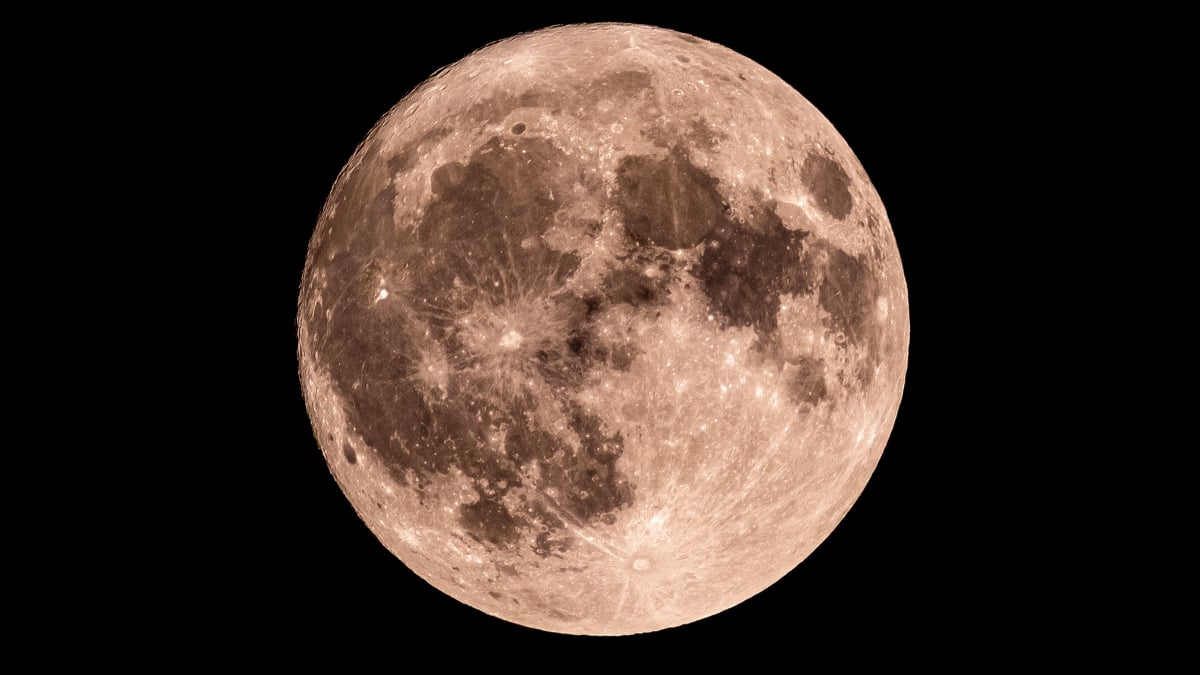
It’s the Full Moon, and the first of two in May. This one is known as the Flower Moon.
What is today’s Moon phase?
As of Friday, May 1, the Moon phase is Full Moon. Tonight, 100% of the moon will be lit up, according to NASA’s Daily Moon Guide.
Without any visual aids, tonight you should be able to see the Mare Serenitatis, Tycho Crater, and the Copernicus Crater. With binoculars, you’ll see the Posidonus Crater, Archimedes Crater, and the Alphonsus Crater. And, finally, with a telescope you’ll see all this plus the Apollo 16 landing spot, Rima Hyginus, and the Fra Mauro Highlands.
When is the next Full Moon?
There are two Full Moons in May, with the next due to take place on May 30 in North America. Depending on where you are in the world, the next Moon may peak on May 31.
What are Moon phases?
According to NASA, the Moon takes roughly 29.5 days to circle Earth once, going through eight distinct phases in the process. Even though we always see the same side of the Moon, the amount of sunlight hitting it changes as it moves in its orbit. The shifting light creates the changing shapes we know as full, half, and crescent Moons. Altogether, there are eight main lunar phases.
New Moon – The Moon is between Earth and the sun, so the side we see is dark (in other words, it’s invisible to the eye).
Mashable Light Speed
Waxing Crescent – A small sliver of light appears on the right side (Northern Hemisphere).
First Quarter – Half of the Moon is lit on the right side. It looks like a half-Moon.
Waxing Gibbous – More than half is lit up, but it’s not quite full yet.
Full Moon – The whole face of the Moon is illuminated and fully visible.
Waning Gibbous – The Moon starts losing light on the right side. (Northern Hemisphere)
Third Quarter (or Last Quarter) – Another half-Moon, but now the left side is lit.
Waning Crescent – A thin sliver of light remains on the left side before going dark again.